There are seasons in life when you feel like you have nothing left. The weight of responsibilities, the ache of grief, the grind of chronic illness, the pressure of uncertain circumstances — they drain you in ways that go far deeper than physical exhaustion. Your emotional reserves run dry. Your spiritual tank hits empty. And the voice in your head whispers that you should be stronger than this, that everyone else seems to hold it together better than you do.
Our culture glorifies self-sufficiency. We admire people who never seem to need help, who power through every obstacle on sheer willpower alone. But the Bible tells a radically different story about strength. Scripture reveals a beautiful paradox: the people God used most powerfully were the ones who admitted they couldn't do it on their own. These bible verses about strength don't point you back to yourself — they point you to the God who promises to be strong on your behalf, especially when you've reached the end of your own resources.
What the Bible Teaches About Strength
If you read the Bible looking for a self-help manual on building inner toughness, you'll be surprised by what you find. From Genesis to Revelation, God's message about strength is consistent and counter-intuitive: real strength isn't about having more willpower, more discipline, or more grit. It's about learning to depend on Someone whose power has no limits.
The apostle Paul understood this better than anyone. He was shipwrecked, beaten, imprisoned, and afflicted by what he called a "thorn in the flesh" — some persistent suffering that God chose not to remove. When Paul begged God three times to take it away, God gave him an answer that has changed the way believers understand strength for two thousand years:
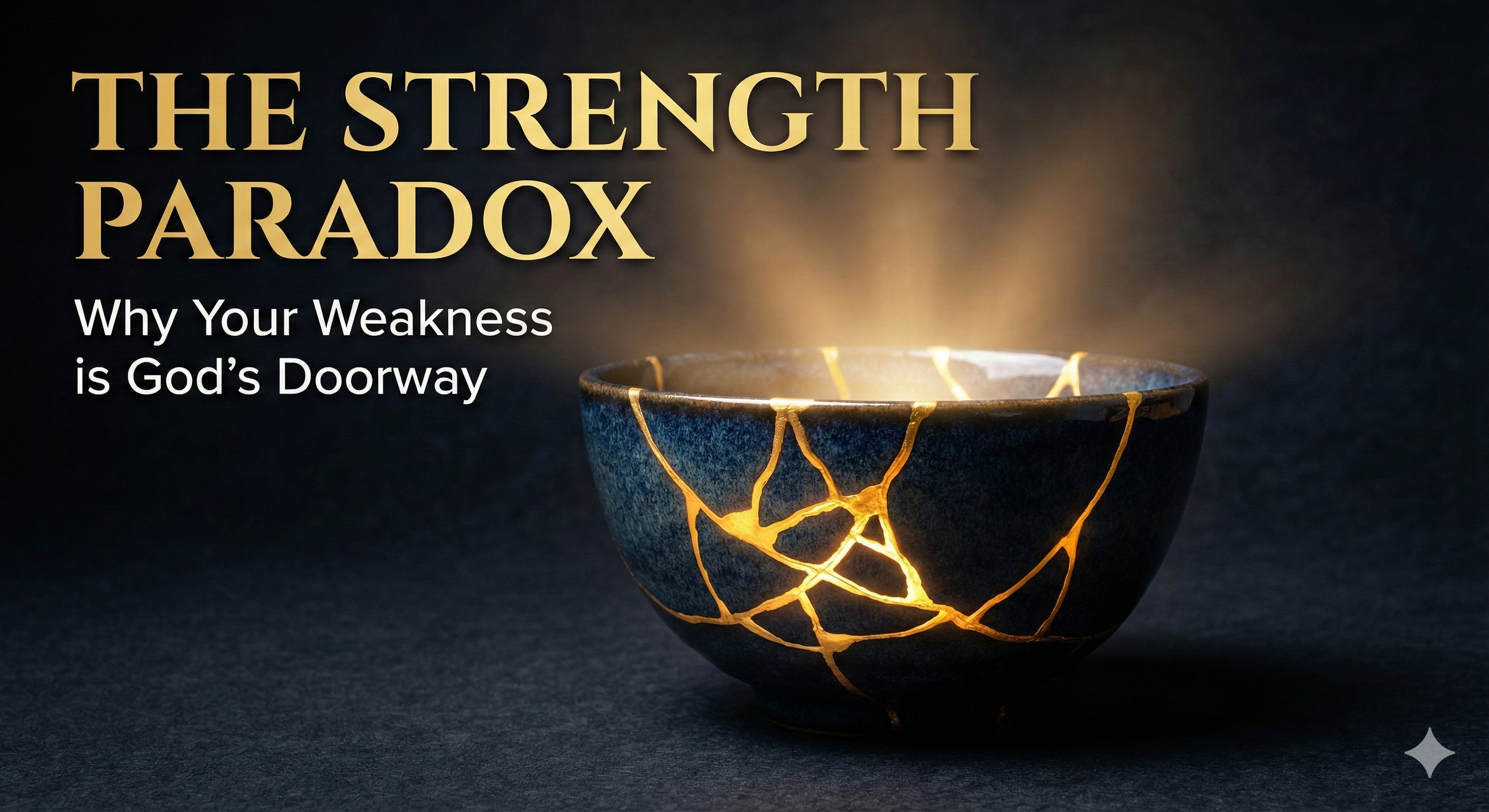
This is the foundation of everything the Bible teaches about strength. God doesn't help those who help themselves — He helps those who know they can't help themselves. Your weakness isn't a disqualification from God's power. It's the very doorway through which His power enters your life. When you stop pretending you have it all together, you create room for God to show up in ways that are unmistakably His work, not yours.
15 Bible Verses About Strength for Every Season
Whatever you're walking through right now, there is a scripture that speaks directly into your situation. Here are fifteen of the most powerful bible verses about strength, organized by the specific kind of encouragement you might need today.
When You Feel Weak
Some days, weakness isn't a theological concept — it's the reality staring back at you in the mirror. You're running on fumes and you know it. These verses are for those moments when you've honestly got nothing left to give.
Notice what Isaiah doesn't say. He doesn't say that people who hope in the Lord will never get tired. He says they will be renewed. There's a difference. God doesn't promise to prevent exhaustion — He promises to meet you in it. The image of soaring on eagles' wings isn't about escaping difficulty. Eagles soar by catching thermal currents — they extend their wings and let the wind do the work. That's what finding strength in God looks like. You stop flapping and start trusting.
The psalmist Asaph doesn't sugarcoat reality. He admits that his body fails. His heart fails. Everything inside him can give out. But he doesn't end there. God is the strength of his heart — not a supplement to his own strength, but the strength itself. When everything that is "you" runs out, God is still your portion. He is enough.
When You Need Courage
Fear has a way of masquerading as wisdom. It tells you to play it safe, to shrink back, to avoid the hard conversation or the risky step of obedience. But God's Word speaks directly against that paralyzing voice.
God spoke these words to Joshua at one of the most overwhelming moments imaginable. Moses — the greatest leader Israel had ever known — was dead, and Joshua was expected to fill his shoes and lead an entire nation into hostile territory. The command to "be strong and courageous" wasn't a pep talk. It was rooted in a promise: "the Lord your God will be with you wherever you go." Joshua's courage didn't come from his own bravery. It came from the presence of God walking beside him into the unknown.
This verse from Isaiah is one of the most tender strength scriptures in the entire Bible. God isn't standing at a distance shouting encouragement. He is actively strengthening you, actively helping you, and actively holding you up with His own hand. The image is personal and intimate — like a parent steadying a child who is learning to walk. You may stumble, but you won't fall, because He's got you.
When You're Facing Trials
Trials have a way of making us question everything — God's goodness, His plan, whether He's paying attention at all. These scriptures for strength don't dismiss the pain of trials, but they reframe what's happening beneath the surface.
This might be the most quoted — and most misunderstood — strength bible verse of all time. Paul isn't talking about winning competitions or achieving personal goals. Read the context: he's talking about being content whether he has plenty or is in need, whether he's well fed or hungry. "I can do all this" means "I can endure any circumstance" — because Christ gives him the strength to face whatever comes. This verse isn't a blank check for success. It's a promise that no situation in life is beyond the reach of God's sustaining power.
James isn't asking you to pretend trials feel good. The joy he's talking about isn't happiness about your circumstances — it's a deep-rooted confidence that God is using this painful season to build something lasting in you. Trials test your faith the way fire tests gold: not to destroy it, but to purify it. The perseverance that develops through suffering isn't just endurance for endurance's sake — it's the pathway to spiritual maturity.
This verse doesn't say that all things are good. It says God works all things for good. There's a massive difference. Some things that happen to us are genuinely terrible. But God is a master redeemer who can take the worst chapters of your story and weave them into something purposeful and beautiful — even when you can't see how.
When You Need Endurance
Sometimes you don't need a dramatic rescue. You need the quiet, stubborn strength to keep going when the road is long and the finish line is nowhere in sight.
The people of Israel were weeping because they had heard God's law and realized how far they had fallen short. But Nehemiah told them to stop grieving and start celebrating, because the joy of the Lord — not their own performance, not their own righteousness — was their strength. When your endurance runs thin, joy rooted in who God is (not in what's happening around you) becomes the fuel that keeps you moving forward.
David wrote this psalm after God delivered him from Saul and all his enemies. The image of a deer standing on mountain heights is vivid — deer are surefooted in the most treacherous terrain. God doesn't just give you strength for flat, easy paths. He gives you the kind of strength that keeps you steady on the steep, rocky, dangerous climbs of life.
What makes Habakkuk's declaration so remarkable is what comes just before it. He describes a worst-case scenario: no figs on the trees, no grapes on the vines, no food, no flocks. Everything gone. And yet — "I will rejoice in the Lord, I will be joyful in God my Savior." This is endurance at its deepest level: choosing to trust God's strength when every visible support has been stripped away.
When You Feel Alone
Loneliness amplifies every struggle. When you feel isolated — whether through loss, relocation, conflict, or simply the deep ache of being misunderstood — it's easy to believe you're fighting alone. These verses remind you that you never are.
Three words in this verse change everything: "ever-present help." Not sometimes-present. Not present-when-you-deserve-it. Ever-present. God isn't a fair-weather friend who shows up when things are easy. He is a refuge — a safe place you can run to — and He is strength when yours gives out. The rest of Psalm 46 describes mountains crumbling into the sea and nations in uproar, and in the middle of all that chaos, God says, "Be still, and know that I am God." He is steady even when the whole world shakes.
David calls God both his strength and his shield — the power to keep going and the protection to stay safe while he does. And notice the result: trust leads to help, and help leads to joy and praise. There's a progression here. When you choose to trust God with your weakness, He responds with tangible help, and that help produces a joy that overflows into worship.
Paul writes this at the beginning of his famous passage about the armor of God. The phrase "be strong in the Lord" is a command — not to muster your own strength, but to find your strength in Him. You put on God's armor, not your own. You stand in His power, not yours. You are never fighting alone because the battle belongs to the Lord.
The Paradox of Strength Through Weakness
If there is one thread that runs through every scripture about strength, it's this: God's economy works in reverse. The world says strength means never needing anyone. God says strength means knowing exactly who to need. The world says admitting weakness is failure. God says admitting weakness is the first step toward His power showing up in your life.
Think about the people in Scripture whom God used most powerfully. Moses stuttered and begged God to send someone else. Gideon was the least member of the weakest clan. David was the youngest, smallest brother overlooked by everyone. Paul carried a painful thorn that God refused to remove. Every one of them discovered the same truth: God's power doesn't require your strength. It requires your surrender.
"The world says strength is never needing help. God says strength is knowing exactly where your help comes from."
This is why Paul could say he "delighted" in his weaknesses. Not because suffering felt good, but because every moment of weakness became an invitation for God's power to step in. When you stop trying to be your own source of strength, you make room for the God of the universe to be strong through you. And His strength doesn't just get you through — it accomplishes things that would have been impossible if you'd been relying on yourself all along.
How to Meditate on Strength Scriptures
Knowing bible verses about strength is one thing. Letting them sink deep enough to actually change how you face difficulty is another. Here are five practices that will help these scriptures move from head knowledge to heart transformation.
1. Choose One Verse for Your Season
Don't try to memorize all fifteen verses at once. Look at the categories above and ask yourself honestly: what do I most need right now? Courage? Endurance? The assurance that I'm not alone? Pick the one verse that speaks most directly to where you are today, and let it become your anchor for this season. You can always come back for a different verse when your season changes.
2. Speak It Out Loud
There is something powerful about hearing God's Word in your own voice. When you speak a scripture out loud, it engages your mind, your hearing, and your heart all at once. Try reading your chosen verse aloud each morning — slowly, deliberately, as if you're hearing it for the first time. Let the words settle. Repeat them until they feel less like information and more like a personal promise from God to you.
3. Pray It Back to God
Turn the verse into a conversation with God. If your verse is Isaiah 41:10, your prayer might sound like: "Lord, You tell me not to fear because You are with me. I confess that I am afraid right now. But I choose to believe that You are my God, that You will strengthen me and help me. Hold me up today with Your righteous right hand." Praying scripture back to God takes the truth off the page and plants it in the soil of your actual life.
4. Journal Your Weakness Honestly
Strength in God's kingdom begins with honesty about your weakness. Take a few minutes to write down what's draining you, what scares you, where you feel inadequate. Don't filter it. Don't try to sound spiritual. Just tell the truth. Then, beside each honest admission, write the scripture that speaks into that specific weakness. Seeing God's promise next to your pain is a powerful way to let His Word reframe your reality.
5. Build a Daily Strength Practice
Consistency matters more than intensity. Even five minutes of intentional scripture meditation each day will reshape how you respond to difficulty over time. The Faith app can help you build this practice by guiding you through personalized meditation sessions focused on scriptures about strength. Whether it's first thing in the morning or last thing before sleep, a daily rhythm of meditating on God's strength will build spiritual endurance that carries you through whatever comes.
Conclusion
If you've been carrying the weight of trying to be strong enough on your own, these bible verses about strength offer a different path. You don't have to have it all together. You don't have to pretend the hard things aren't hard. You don't have to white-knuckle your way through one more day on willpower alone. God is not waiting for you to be strong enough to earn His help. He is inviting you — right now, in the middle of your weakness — to let His strength become yours.
The strongest people in the Bible were not the ones who never struggled. They were the ones who learned to bring their struggles to God. Moses, David, Paul, Habakkuk — every one of them discovered that God's power shows up most clearly in the places where human strength runs out. Your weakness is not your shame. It is the sacred space where God does His best work.
So wherever you are today — exhausted, afraid, overwhelmed, or quietly holding on by a thread — take these scriptures and hold them close. Speak them. Pray them. Meditate on them until they become the bedrock beneath your feet. Because the God who spoke the universe into existence is the same God who promises to renew your strength, and He has never once broken a promise.