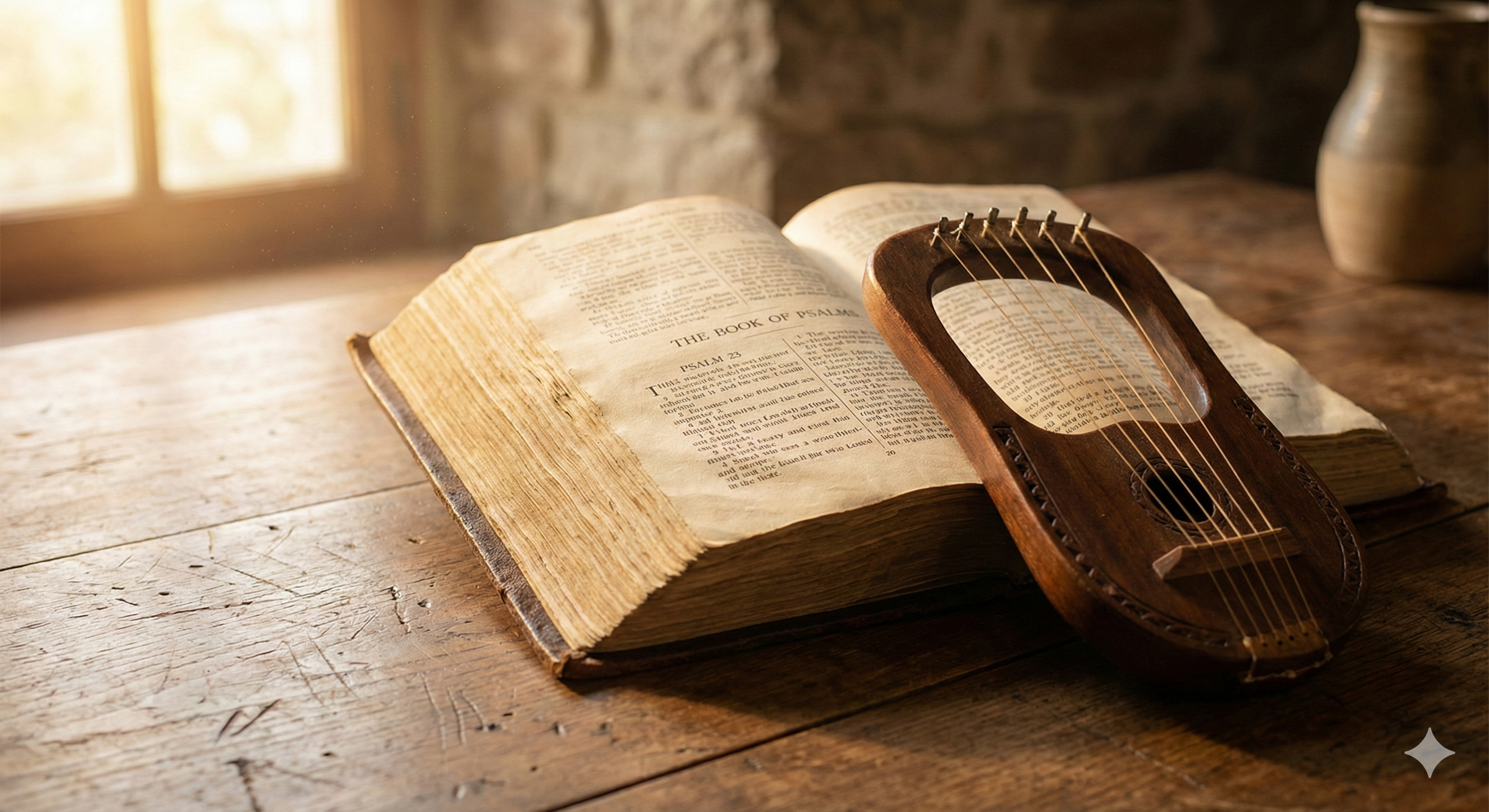
The Book of Psalms is the most-read, most-quoted, and most-loved book in the entire Bible. For three thousand years, believers have turned to the Psalms in their highest joys and deepest sorrows. It is the Bible's own prayer book, hymnal, and meditation guide rolled into one.
Whether you're looking for comfort in grief, words to express praise, help with anxiety, or simply a deeper way to pray, the Psalms meet you exactly where you are. This guide will help you understand the structure of the Psalms, explore their major themes, and learn practical ways to meditate on them daily.
Overview of the Book of Psalms
The Book of Psalms contains 150 individual psalms, making it the longest book in the Bible. The Hebrew title is Tehillim, meaning "praises," though the Psalms cover far more than praise alone. They span the full range of human emotion—joy, sorrow, anger, fear, gratitude, despair, and hope.
The Psalms were written over a period of roughly 1,000 years by multiple authors:
- David: 73 psalms attributed to him, the most of any author
- Asaph: 12 psalms (a Levitical worship leader)
- Sons of Korah: 11 psalms (a family of temple musicians)
- Solomon: 2 psalms (Psalm 72 and 127)
- Moses: 1 psalm (Psalm 90, the oldest psalm)
- Anonymous: Many psalms have no named author
The Five Books of the Psalms
The Psalms are organized into five books, mirroring the five books of Moses (the Pentateuch). Each book ends with a doxology—a short hymn of praise:
- Book 1 (Psalms 1-41): Mostly personal psalms of David, focusing on the individual's relationship with God
- Book 2 (Psalms 42-72): A mix of David and the Sons of Korah, with themes of national deliverance
- Book 3 (Psalms 73-89): Primarily Asaph's psalms, wrestling with suffering and God's faithfulness
- Book 4 (Psalms 90-106): Emphasizing God's eternal kingship and reign
- Book 5 (Psalms 107-150): Psalms of thanksgiving and praise, ending with five "Hallelujah" psalms
The entire Psalter builds toward a crescendo of praise. It begins with Psalm 1's quiet meditation on God's Word and ends with Psalm 150's explosive call for everything that has breath to praise the Lord.
Types of Psalms
Understanding the different types of psalms helps you find the right psalm for any season of life:
Psalms of Praise and Thanksgiving
These psalms celebrate who God is and what He has done. They overflow with gratitude and wonder at God's creation, character, and mighty acts. Key examples include Psalms 8, 19, 100, 103, and 145.
Psalms of Lament
These are the most common type of psalm. They express honest pain, confusion, and sorrow to God. Lament psalms typically follow a pattern: address to God, complaint, confession of trust, petition, and a vow of praise. Key examples include Psalms 13, 22, 42, 51, and 88.
Psalms of Trust and Confidence
These psalms express deep faith in God's protection and care, even amid difficulty. They are anchors for the soul during uncertain times. Key examples include Psalms 23, 27, 46, 91, and 121.
Royal and Messianic Psalms
These psalms originally concerned Israel's king but ultimately point to Christ, the promised Messiah. Psalm 2 speaks of God's anointed Son. Psalm 22 describes the suffering Messiah in language Jesus fulfilled on the cross. Psalm 110 declares the Messiah as both King and Priest.
Wisdom Psalms
These psalms teach about righteous living, the contrast between the godly and the wicked, and the value of God's law. Key examples include Psalms 1, 37, 49, 73, and 119.
Psalms of Ascent
Psalms 120-134 are called "Songs of Ascent," likely sung by pilgrims traveling up to Jerusalem for worship. These short, memorable psalms build upon one another in a journey toward God's presence.
Key Themes in the Psalms
1. The Character of God
The Psalms reveal God as Creator, King, Shepherd, Fortress, Refuge, Healer, and Redeemer. No other book of the Bible uses so many images and names for God. Through the Psalms, we discover who God truly is—not as abstract theology but as living, personal reality.
2. Honest Prayer
The Psalms give us permission to bring our whole selves to God—including our anger, doubt, fear, and confusion. The psalmists don't filter their emotions. They complain, question, and even accuse God of abandonment. Yet they always return to trust.
3. The Word of God
Psalm 119, the longest chapter in the Bible, is an extended meditation on the beauty and power of God's Word. Throughout the Psalms, Scripture is described as a lamp, honey, gold, and the source of all wisdom.
4. Suffering and Deliverance
The Psalms don't shy away from suffering. They describe enemies, illness, betrayal, and despair with raw honesty. But they also testify again and again that God hears, God rescues, and God restores.
5. Worship and Praise
The Psalms were Israel's worship songs. They call for praise with instruments, singing, dancing, and shouts of joy. They remind us that worship is not just a Sunday activity but the proper response of a soul that knows God.
Psalms for Every Season of Life
One of the Psalms' greatest gifts is that they speak to every human experience. Here are psalms for specific needs:
- When you're anxious: Psalm 46, Psalm 55, Psalm 94
- When you can't sleep: Psalm 3, Psalm 4, Psalm 127
- When you're grieving: Psalm 34, Psalm 42, Psalm 116
- When you need strength: Psalm 18, Psalm 27, Psalm 62
- When you feel alone: Psalm 25, Psalm 139, Psalm 142
- When you need forgiveness: Psalm 32, Psalm 51, Psalm 130
- When you're grateful: Psalm 100, Psalm 103, Psalm 136
- When you need guidance: Psalm 25, Psalm 32, Psalm 119
- When you're afraid: Psalm 23, Psalm 27, Psalm 91
- When you want to worship: Psalm 95, Psalm 145, Psalm 150
How to Meditate on the Psalms
The Psalms were designed for meditation. The very first psalm establishes this:
Here are practical ways to meditate on the Psalms:
Read One Psalm Slowly Each Day
Rather than rushing through multiple chapters, spend time with a single psalm. Read it several times. Notice words and phrases that stand out. Ask what it reveals about God and about your own heart.
Pray the Psalm Back to God
The Psalms are already prayers. Make them your own by reading them aloud as personal prayers. Insert your name. Replace the psalmist's specific circumstances with your own.
Memorize Key Verses
Short psalm verses are perfect for memorization. Carry them with you throughout the day. Psalm 23, Psalm 46:10, and Psalm 119:105 are powerful starting points.
Journal Your Response
After reading a psalm, write down what struck you. What did you learn about God? What emotion does the psalm express? How does it connect to your current circumstances?
Follow a Psalm Reading Plan
Reading five psalms a day takes you through the entire book in one month. Or follow the ancient practice of praying the Psalms in order, cycling through them continuously.
The Psalms teach us that there is no emotion too raw, no situation too desperate, and no joy too great to bring before God. They are the Bible's invitation to pour out your heart to the One who always listens.
The Psalms and Jesus
Jesus knew the Psalms intimately. He quoted them more than any other Old Testament book. On the cross, He prayed Psalm 22: "My God, my God, why have you forsaken me?" His final words were from Psalm 31: "Into your hands I commit my spirit."
After His resurrection, Jesus told His disciples that "everything must be fulfilled that is written about me in the Law of Moses, the Prophets and the Psalms" (Luke 24:44). The Psalms point to Christ throughout—His suffering, His kingship, His priesthood, and His ultimate triumph.
Conclusion
The Book of Psalms is unlike anything else in Scripture. It is God's Word given to us as our words back to God. It teaches us how to pray, how to worship, how to grieve, and how to hope. It meets us in our darkest valleys and leads us to the highest peaks of praise.
No matter where you are in your faith journey, the Psalms have something for you. They have sustained believers through persecution, exile, illness, loss, and every trial imaginable. They have also given voice to the deepest joys, the most profound gratitude, and the purest worship the human heart can offer.
Begin today. Open the Psalms. Read slowly. Pray honestly. And discover why, for three thousand years, God's people have found in these ancient songs everything they need to draw near to the God who hears every prayer.