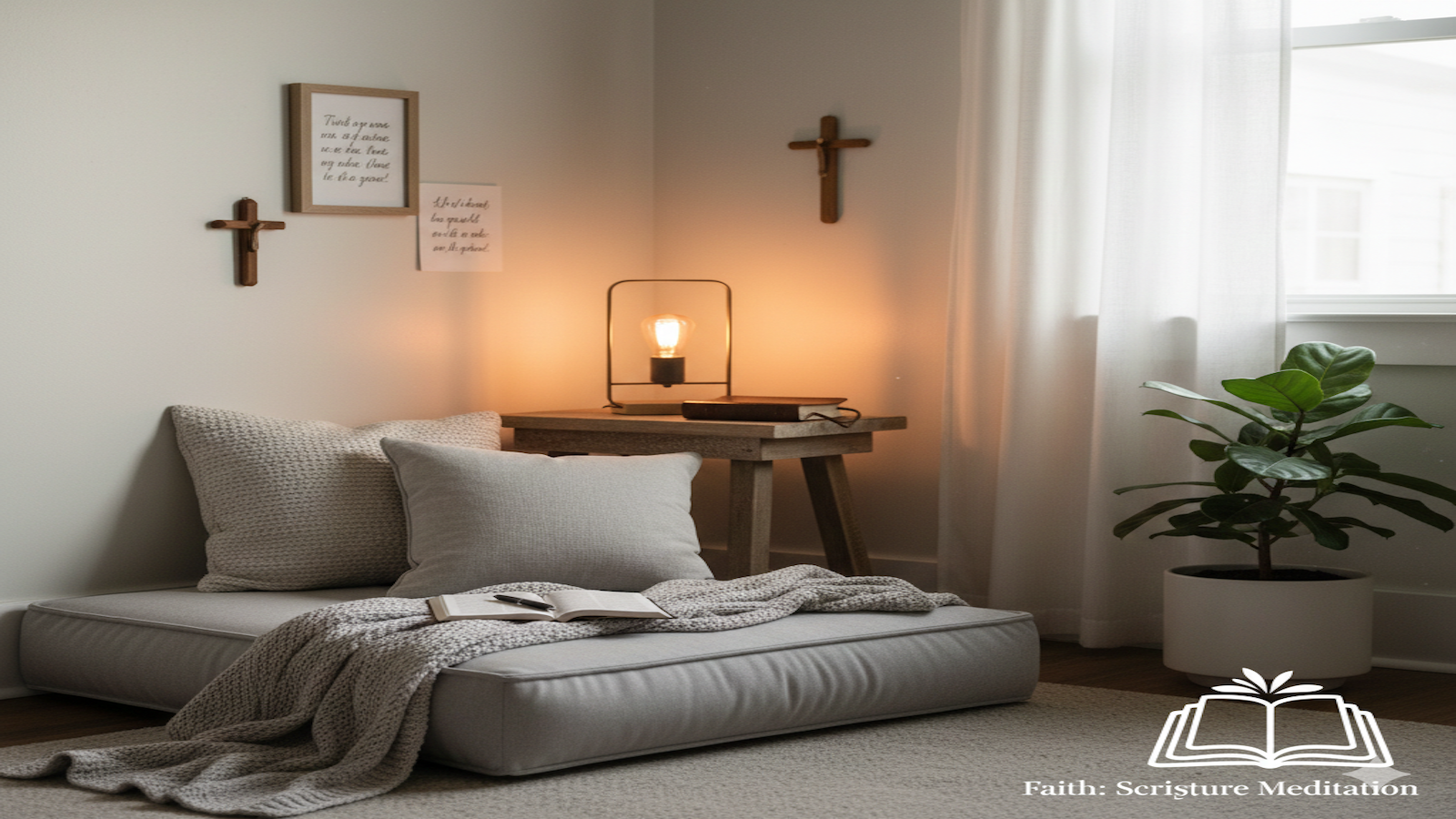
In our busy, noisy world, finding a place of quiet connection with God can feel like a luxury we can't afford. Yet Jesus Himself regularly withdrew to solitary places to pray, understanding the profound importance of having a dedicated space for communion with the Father. Creating your own sacred space for prayer and meditation isn't about having the perfect room or expensive furnishings—it's about intentionally setting apart a place where you can meet with God consistently.
Whether you have a spare room, a quiet corner, or just a few feet of space by your bedside, you can create an environment that invites peace, focuses your heart, and deepens your connection with God. Let's explore how to transform any space into a sanctuary for your soul.
The Heart Behind the Space
Before focusing on the physical elements, it's important to understand that a sacred space is ultimately about your heart's intention, not your home's décor. God doesn't require a beautiful room to meet with you—He desires a humble heart that seeks Him. However, our physical environment does impact our ability to focus and engage spiritually, which is why creating an intentional space can be so valuable.
Start with Purpose, Not Perfection
Your sacred space doesn't need to be Instagram-worthy or resemble a monastery chapel. It simply needs to be a place where you can consistently meet with God without distractions. The goal is to create an environment that signals to your mind and heart: "This is time and space set apart for God."
Essential Elements of a Sacred Space
While every sacred space will be unique to your personality, living situation, and resources, there are several key elements that can enhance your prayer and meditation experience.
Comfortable Seating
Choose seating that allows you to be alert yet relaxed. This might be:
- A comfortable chair with good back support
- Floor cushions for a more contemplative posture
- A prayer kneeler if you prefer kneeling in prayer
- A simple stool or bench for upright meditation
The key is finding something that allows you to maintain focus without physical discomfort becoming a distraction.
Sacred Texts and Devotional Materials
Keep your Bible, journal, and any devotional books within easy reach. Consider having:
A dedicated Bible for your prayer space, perhaps in a translation that's particularly meaningful to you. Let this be a Bible you only use in this sacred time and place.
- A prayer journal for recording thoughts, prayers, and insights
- Devotional books that help guide your meditation
- A small basket or box to keep everything organized
Creating Atmosphere for Worship
The atmosphere of your space can significantly impact your ability to enter into worship and prayer. Consider these elements that engage your senses and draw your heart toward God.
Lighting That Invites Contemplation
Soft, warm lighting often creates a more conducive atmosphere for prayer than harsh overhead lights. Options include:
- A small lamp with a warm bulb
- Candles (if safe and appropriate for your space)
- Natural light from a window during daytime prayer
- String lights for a gentle, peaceful ambiance
Visual Reminders of Faith
Simple visual elements can help focus your heart on God and His character:
- A cross or other meaningful Christian symbol
- Scripture verses written on cards or hung on the wall
- A small plant or flowers as reminders of God's creation
- Family photos to prompt prayers for loved ones
Adapting to Your Living Situation
Not everyone has the luxury of a dedicated room for prayer. Here are practical suggestions for different living situations:
Small Spaces and Shared Homes
- Create a "portable sacred space" with a basket containing your Bible, journal, and prayer items
- Use a room divider or curtain to create privacy in a shared space
- Designate specific times when a shared area becomes your prayer space
- Consider early morning or late evening when others are sleeping
Maintaining Your Sacred Space
Once you've created your sacred space, maintaining it becomes an act of worship in itself. Keep it clean, organized, and ready for your next time with God. This care communicates to your heart that this time and space are precious and important.
Consistency Over Perfection
The most important aspect of your sacred space is not how it looks but how regularly you use it. A simple corner with a chair and Bible that you visit daily is infinitely more valuable than an elaborate prayer room that sits unused.
Put It Into Practice
Start today by identifying one small area in your home that you can dedicate to prayer and meditation. It might be as simple as a chair by a window or a corner of your bedroom. Set it up with the basics—a Bible, a journal, and perhaps one meaningful visual reminder of God's love. Then commit to spending time there regularly, allowing this physical space to become a launching point for deeper spiritual connection.
Conclusion
Creating a sacred space for prayer and meditation is ultimately about creating an environment that supports your relationship with God. Whether elaborate or simple, large or small, your sacred space becomes a physical reminder of the spiritual reality that God desires to spend time with you. In our fast-paced world, having a dedicated place to meet with God can be the anchor that keeps your soul grounded in His peace and presence.
Remember, the goal isn't to create the perfect space but to create a consistent practice of meeting with God. Let your sacred space become a place of refuge, growth, and transformation as you cultivate deeper intimacy with your Heavenly Father.