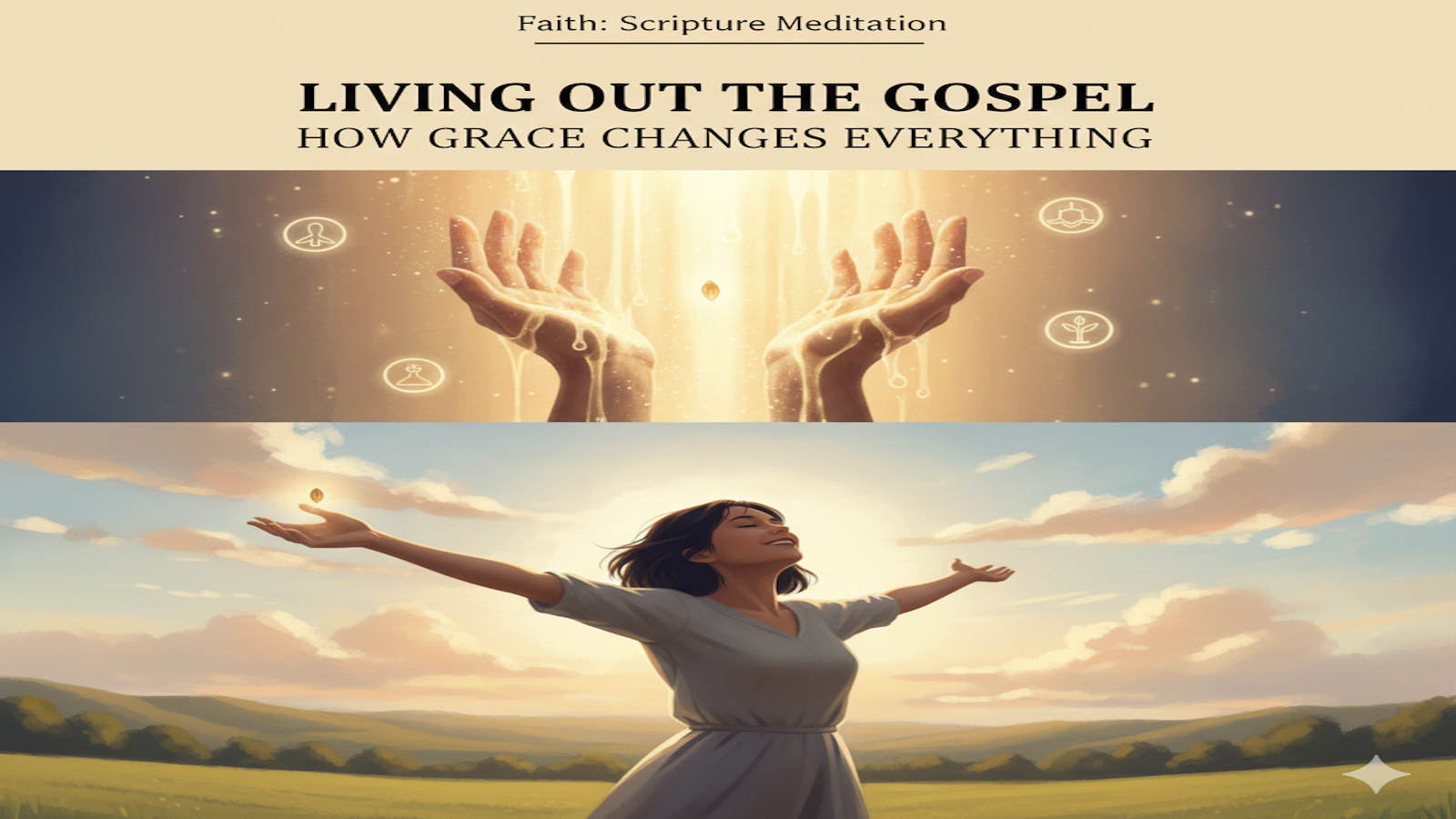
Grace is more than just God's unmerited favor—it's a transformative power that changes everything about how we live. Yet many Christians struggle to move beyond viewing grace as simply a "get out of jail free" card for sin. True gospel living means understanding that grace isn't just what saves us; it's what sustains us, motivates us, and transforms us daily. When we truly grasp God's grace, it revolutionizes our relationships, our service, our struggles, and our joy.
Living out the gospel means living from grace rather than for grace. It's the difference between trying to earn God's love through good behavior and responding to His love that has already been freely given. This shift in perspective doesn't lead to careless living—it leads to the most authentic, joyful, and transformative Christian life possible.
Understanding Grace Beyond Salvation
Many Christians understand grace in terms of salvation but struggle to apply it to daily living. The same grace that saved us continues to work in us, providing:
Empowerment for Obedience
Grace isn't opposed to holiness—it's the power that enables it. We don't obey God to earn His love; we obey Him because His love has already been secured for us. This removes the pressure of performance while providing the motivation of gratitude.
Freedom from Condemnation
When we fail (and we will), grace means our identity as God's beloved children remains unchanged. We can confess sin quickly and honestly because we know our standing with God is secure in Christ.
"Therefore, there is now no condemnation for those who are in Christ Jesus." - Romans 8:1
Motivation for Service
Grace-motivated service flows from joy rather than obligation. We serve others not to win God's approval but because we already have it. This creates sustainable, joyful ministry rather than burnout-inducing duty.
How Grace Transforms Daily Life
In Our Self-Perception
Grace radically changes how we see ourselves. Instead of defining ourselves by our performance, successes, or failures, we find our identity in being God's beloved children. This creates:
- Freedom from perfectionism: We can attempt new things without fear of failure
- Healthy self-worth: Our value comes from God's love, not our achievements
- Courage to be vulnerable: We can admit struggles without losing our identity
- Ability to rest: We don't need to constantly prove our worth
In Our Relationships
Understanding grace transforms how we relate to others:
- Extending forgiveness: Having received unlimited forgiveness, we can offer it to others
- Accepting imperfection: We can love others without trying to fix or change them
- Serving without strings: We can help others without expecting anything in return
- Building authentic community: We can be honest about our struggles and needs
In Our Response to Failure
Grace completely changes how we handle mistakes and sin:
- Quick confession: We don't hide from God when we fail
- Learning over self-condemnation: Mistakes become growth opportunities
- Getting back up: We don't stay down when we stumble
- Helping others: Our failures can minister to others facing similar struggles
Practical Ways to Live from Grace
1. Start Each Day with Gospel Reminders
Begin your morning by remembering who you are in Christ:
- You are loved unconditionally
- You are forgiven completely
- You are accepted fully
- You have unlimited access to God's presence
- You are equipped for whatever the day brings
2. Replace "Have to" with "Get to"
Transform duty-based thinking into privilege-based thinking:
- "I have to pray" becomes "I get to talk with God"
- "I have to serve" becomes "I get to participate in God's work"
- "I have to forgive" becomes "I get to reflect God's character"
- "I have to obey" becomes "I get to live in God's best plan"
3. Practice Grace-Based Confession
When you sin, remember the pattern of healthy confession:
- Acknowledge: Name the specific sin honestly
- Accept: Receive God's complete forgiveness
- Adjust: Ask for grace to live differently
- Advance: Move forward without self-condemnation
4. Extend Grace to Others
Look for opportunities to show grace in relationships:
- Forgive before being asked
- Assume positive motives when others hurt you
- Serve without keeping score
- Speak words of encouragement rather than criticism
- Create safe spaces for others to be vulnerable
Common Obstacles to Grace-Based Living
Perfectionism
The drive to get everything right stems from a performance-based mindset. Grace reminds us that God loves us as we are while transforming us into who He wants us to become—and He's in no hurry.
Comparison
When we compare our spiritual progress to others, we're missing the point of grace. God's love for you isn't based on how you measure up to other believers but on Christ's perfect work on your behalf.
Cheap Grace
Some fear that emphasizing grace leads to careless living. True grace, however, is transformative. It doesn't minimize sin—it provides the power to overcome it through love rather than fear.
Past Failures
Satan loves to remind us of past failures to keep us trapped in guilt. Grace means your past is forgiven, your present is secure, and your future is hope-filled regardless of what you've done.
"But he said to me, 'My grace is sufficient for you, for my power is made perfect in weakness.'" - 2 Corinthians 12:9
The Fruit of Grace-Based Living
When we truly live from grace, the results are transformative:
Sustainable Joy
Joy that doesn't depend on circumstances but on our secure relationship with God.
Authentic Relationships
Relationships built on honesty, acceptance, and unconditional love rather than performance and approval.
Resilient Faith
Faith that can withstand disappointment, failure, and suffering because it's grounded in God's unchanging character rather than our changing circumstances.
Effective Ministry
Service that flows from overflow rather than obligation, creating lasting impact without personal burnout.
Contagious Christianity
A faith so attractive and life-giving that others are drawn to know more about the God who could create such transformation.
Conclusion
Living out the gospel means allowing grace to permeate every aspect of our lives. It's not about trying harder to be good enough for God—it's about resting in the truth that He has already made us righteous through Christ. This rest doesn't lead to complacency; it leads to the kind of transformed life that can only come through the power of grace.
As you grow in understanding God's grace, you'll find that it truly does change everything. Your relationship with God becomes more intimate, your relationships with others become more loving, and your approach to life becomes more joyful. This is the gospel life—not perfect, but progressively transformed by the amazing grace of God.